

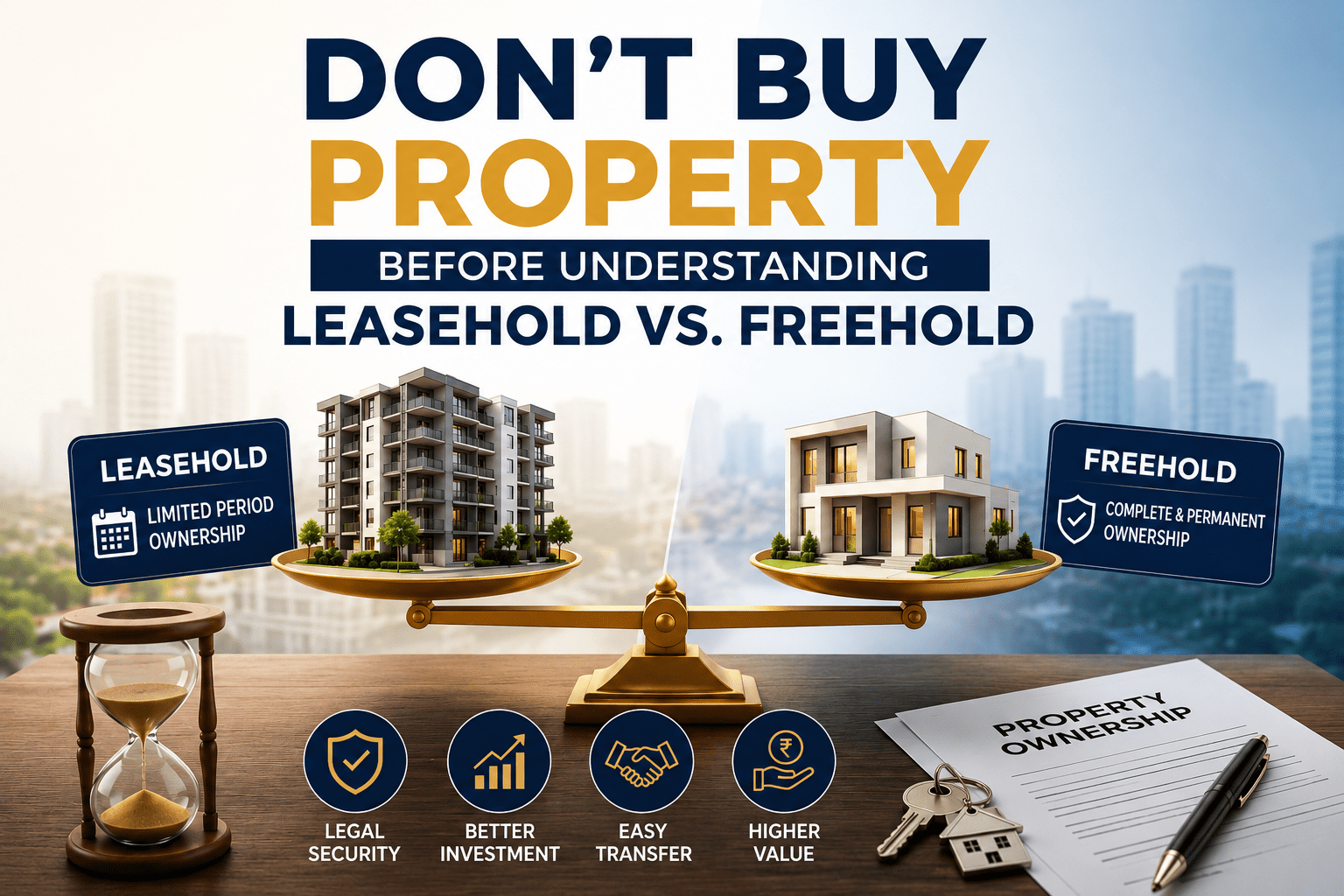
Don’t Buy Property Before Understanding Leasehold vs Freehold
Buying a property is one of the biggest financial decisions you will ever make. Yet, many buyers focus only on location, amenities, and pricing while ignoring one of the most critical aspects of ownership: whether the property is leasehold or freehold.
This single factor can impact your ownership rights, resale value, loan approval, inheritance, redevelopment possibilities, and long-term investment returns. If you do not understand the difference between leasehold and freehold property, you may end up facing legal complications or financial losses later.
In India, both leasehold and freehold properties are common. Government development authorities, housing boards, and some private developers often offer leasehold properties, while independent houses and many residential plots are freehold. Understanding the pros, cons, and legal implications of both is essential before signing any agreement.
According to legal and real estate experts, freehold ownership generally provides stronger ownership rights and easier transferability, while leasehold ownership comes with tenure limitations and additional conditions.
What is Freehold Property?
A freehold property gives the buyer complete ownership of both the land and the structure built on it. The owner has permanent rights over the property and can sell, transfer, renovate, lease, or inherit it without seeking permission from any authority, subject to local regulations.
In simple words, if you buy a freehold property, you become the absolute owner of the property forever.
Key Features of Freehold Property
- Full ownership rights
- No lease expiration
- Easier property transfer
- Better resale value
- Higher chances of bank loan approval
- Freedom to renovate or rebuild
- Long-term investment security
Freehold properties are considered more secure because ownership is perpetual and not restricted by time limitations. This is why banks and financial institutions usually prefer financing freehold properties.
What is Leasehold Property?
A leasehold property means you own the property only for a fixed period, while the land belongs to another authority such as the government, housing board, trust, or development authority.
Lease periods usually range from 30 years to 99 years. Once the lease period expires, ownership rights may revert to the original landowner unless the lease is renewed.
Key Features of Leasehold Property
- Ownership for a limited duration
- Land belongs to another authority.
- Renewal may be required after lease expiry
- Transfer restrictions may apply.
- Permission may be needed for modifications.
- Ground rent or lease charges may apply
- Resale value may reduce over time.
Leasehold properties are often cheaper than freehold properties, which attracts many buyers. However, buyers must carefully check lease terms before purchasing.
Leasehold vs. Freehold: Major Differences
| Feature | Freehold Property | Leasehold Property |
|---|---|---|
| Ownership | Full ownership of land and building | Ownership only for lease duration |
| Tenure | Permanent | Limited period (30–99 years) |
| Control | Full control | Restricted by lease agreement |
| Resale Value | Higher | May decline with lease tenure. |
| Loan Approval | Easier | It depends on remaining lease period |
| Transfer Process | Simple | May require authority approval |
| Renovation Rights | More freedom | Restrictions may apply. |
| Ground Rent | Usually none | Applicable in many cases |
| Investment Security | High | Moderate |
Why Understanding Leasehold vs. Freehold Matters
Many buyers assume all properties provide the same ownership rights. That is a costly mistake.
The difference between leasehold and freehold directly affects the following:
- Property value
- Legal ownership rights
- Ease of resale
- Bank financing
- Future redevelopment
- Family inheritance
- Long-term appreciation
Ignoring these factors can create major problems in the future.
1. Loan Approval Issues
Banks prefer freehold properties because ownership is clear and permanent. Leasehold properties with shorter remaining tenure may face loan rejection or lower financing options.
Experts note that many banks hesitate to finance leasehold properties if the lease period remaining is less than 30 years.
2. Resale Challenges
A freehold property generally enjoys better market demand because buyers prefer permanent ownership.
In contrast, leasehold properties may lose value as the lease term decreases. A property with only 15–20 years left on the lease becomes difficult to sell.
3. Legal Restrictions
Leasehold agreements may include rules related to:
- Property usage
- Structural modifications
- Subletting
- Commercial activities
- Transfer permissions
Violating lease conditions can lead to penalties or legal disputes.
4. Lease Expiry Risks
One of the biggest concerns with leasehold property is what happens after the lease expires.
While many government authorities allow renewals, the process may involve additional charges, legal formalities, and policy changes. In some cases, conversion policies can also be delayed or suspended.
Important Things to Check Before Buying Leasehold Property
If you are considering a leasehold property, never proceed without proper verification.
- Check Remaining Lease Period: The remaining tenure significantly impacts property value and loan eligibility.
- Review the lease agreement carefully. Understand all conditions related to:
- Renewal terms
- Ground rent
- Property usage
- Restrictions
- Transfer rights
- Verify Renewal Policy: Check whether lease renewal is guaranteed or discretionary.
- Confirm Conversion Eligibility: Find out if the property can later be converted to freehold.
- Verify Outstanding Dues: Ensure there are no unpaid lease charges or penalties.
- Conduct Legal Due Diligence: Consult a property lawyer before making a payment. Experts strongly recommend checking title records, conversion certificates, and lease conditions before finalizing a deal.
Which is Better: Leasehold or Freehold?
The answer depends on your financial goals and long-term plans.
Choose Freehold Property If
- You want permanent ownership
- You seek better long-term appreciation
- You want easier resale
- You want fewer legal restrictions
- You plan to pass property to future generations.
Choose Leasehold Property If
- The budget is limited
- Property is in a premium location
- Lease tenure is sufficiently long
- Renewal terms are clear.
- You are buying for short- to medium-term use
However, for most buyers, freehold ownership offers stronger long-term security and investment value.
Future Trends in Indian Real Estate
Indian real estate markets are evolving rapidly, and ownership structures are becoming increasingly important for buyers and investors. Government policies regarding leasehold-to-freehold conversion continue to change in cities like Delhi, Mumbai, and Noida.
As awareness grows, buyers are now paying closer attention to:
- Ownership rights
- Lease tenure
- Redevelopment potential
- Land title clarity
- Conversion possibilities
This shift is making legal due diligence more important than ever.
Final Thoughts
Before buying any property, never focus only on location, pricing, or luxury amenities. Understanding the difference between leasehold vs. freehold property is essential for making a smart and secure investment decision.
A freehold property usually offers stronger ownership rights, better appreciation potential, and long-term peace of mind. Leasehold properties can still be valuable investments, but only when buyers fully understand the lease conditions, remaining tenure, and future implications. Whether you are a first-time homebuyer or a seasoned investor, always verify legal ownership details before signing any agreement.
If you are looking for trusted guidance in real estate investment and property selection, Kings Developer focuses on helping buyers make informed property decisions with transparency, reliability, and long-term value in mind.

Recent Posts

Bought Commercial Space But Can’t Find Tenants? Try These 5 Tips

How Kings Developer Helps You Find the Perfect Property in Dehradun